
Introduction
In a world where personal expression and brand identity are paramount, few tools are as effective and tangible as custom screen printed t-shirts. They are more than just apparel; they are walking billboards for your business, a unifying symbol for your team or event, and a creative outlet for your unique designs. While there are many ways to customize a t-shirt, screen printing remains the undisputed champion for its quality, durability, and professional finish.
This comprehensive guide will walk you through everything you need to know about creating your own custom tees. We’ll explore why screen printing is the best choice for a wide variety of projects, break down the entire process from concept to completion, and give you the knowledge you need to make an informed decision. Whether you’re a business owner, a band, a non-profit organization, or an individual with a great idea, this article will be your roadmap to a perfect final product.
Why Screen Printing is the Gold Standard
Before we dive into the “how,” it’s crucial to understand the “why.” What makes screen printing the preferred method for high-quality custom t-shirts, especially when compared to other techniques like direct-to-garment (DTG) or heat transfers?
1. Unmatched Durability
The longevity of a screen-printed shirt is one of its greatest advantages. The ink used is a specialized plastisol or water-based formula that is pressed directly into the fibers of the fabric and then heat-cured. This process creates a bond that is incredibly resistant to fading, cracking, and peeling, even after countless cycles in the washing machine. This durability ensures that your design will remain vibrant and intact for the entire life of the shirt, providing a long-lasting impression.
2. Vibrant, True-to-Color Prints
Screen printing allows for the use of opaque, highly pigmented inks that produce bold and vibrant colors. Unlike digital printing, which uses a CMYK process, screen printing allows for the use of specific Pantone colors. This is especially critical for brands that need to maintain a precise color identity. A well-printed screen-printed logo will pop off the fabric, making a powerful visual statement that simply can’t be replicated with other methods.
3. Cost-Effectiveness for Bulk Orders
While there is an initial setup cost associated with creating the screens for each color in your design, the per-unit cost of printing drops dramatically with higher quantities. This makes custom screen printed t-shirts an incredibly economical choice for businesses, large events, and merchandise lines that require dozens or hundreds of shirts. The more you print, the more cost-effective the process becomes.
4. A Professional, High-Quality Finish
The crisp, clean lines and smooth texture of a screen-printed design give it a professional and premium feel. Whether it’s a simple one-color logo or a more intricate multi-color design, screen printing delivers a polished finish that conveys quality and attention to detail. This is essential for any brand that wants to be taken seriously.
Your Comprehensive Guide to Creating Custom Screen Printed T-Shirts
Creating a custom t-shirt might seem like a complex process, but it can be broken down into a few simple and manageable steps. By following this guide, you can ensure your project is a success from start to finish.
Step 1: The Design Process
The design is the heart of your project. A great design is often a simple one that communicates your message clearly and effectively.
- Simplicity is Key: For screen printing, simple, bold designs with clean lines and solid colors work best. Intricate details and gradients can be challenging and may not translate well.
- Mind Your Colors: Each color in your design requires a separate screen, which affects the overall cost. For cost-effective projects, try to limit your design to one to three colors.
- File Format: Always provide your printer with a high-quality, vector-based file (such as .AI, .EPS, or .SVG). This type of file can be resized without losing quality, which is crucial for a crisp, clean print. A high-resolution PNG is a viable alternative if you don’t have a vector.
Step 2: Choosing the Right Apparel
The quality of your t-shirt is just as important as the design itself. A fantastic design on a low-quality shirt won’t have the same impact.
- Material:
- 100% Cotton: A classic, breathable, and comfortable choice.
- Cotton/Polyester Blends: Offers a softer feel and greater durability, with less shrinking.
- Tri-blends: A mix of cotton, polyester, and rayon, providing a super soft, vintage feel.
- Fit and Style: Consider your audience. Do you need a standard unisex fit, or would a men’s and women’s cut be more appropriate? Also, think about the shirt’s weight (lightweight vs. heavyweight) and neckline (crew neck, V-neck, etc.).
- Color: Choose a shirt color that complements your design. Lighter inks show up well on darker shirts, while darker inks are best for lighter garments. Note that printing light colors on a dark shirt may require a white underbase, which can count as an extra color.
Step 3: Finding the Right Printer
Your printer is your partner in this process. Finding a reputable and communicative company is essential for a successful outcome.
- Check Reviews and Portfolios: Look at online reviews and ask to see examples of their previous work. A good printer will be proud to show off their portfolio.
- Get Quotes: Don’t be afraid to get quotes from a few different companies. Compare not just the price but also the turnaround time, customer service, and minimum order quantity.
- Ask Questions: Be sure to ask about their process, what types of inks they use (plastisol vs. water-based), and if they offer any design support.
Step 4: The Printing Process Explained
Understanding the basic steps of screen printing will give you a greater appreciation for your final product.
- Artwork Separation: The design is broken down into separate layers for each color.
- Screen Preparation: A fine mesh screen is coated with a light-sensitive emulsion. The separated design is printed onto a transparent film, which is then placed on the screen. The screen is exposed to a bright light, which hardens the emulsion everywhere except where the design is, leaving a stencil.
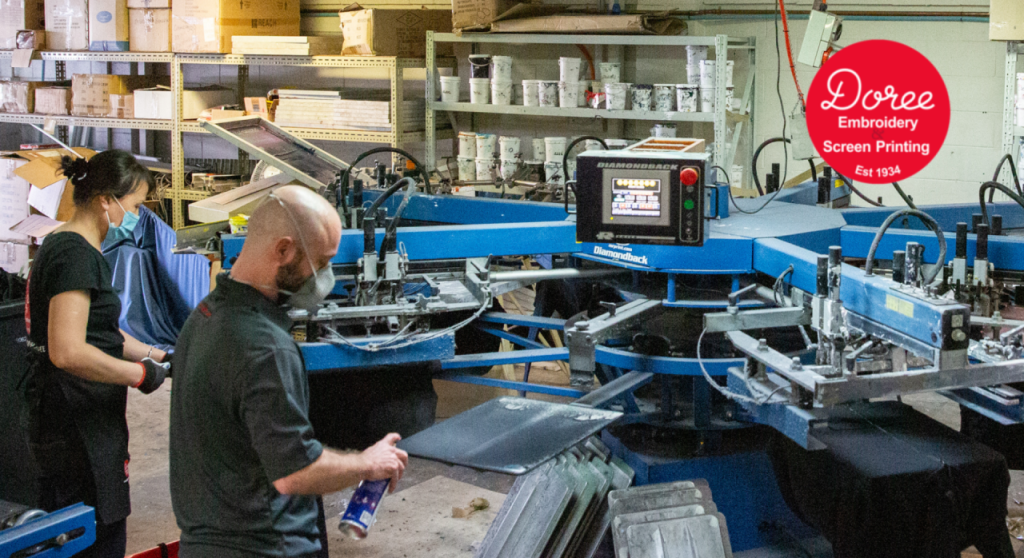
- Ink Application: The screen is placed onto a printing press. A t-shirt is placed on a flat surface, and the screen is lowered. Ink is then pushed through the screen’s open areas (the stencil) using a squeegee.
- Curing: The t-shirt is then passed through a dryer, where the ink is cured at a high temperature. This permanently sets the ink, making it durable and washable.
Screen Printing vs. Other Customization Methods
To help you make an informed decision, here’s a comparison of screen printing with its two most popular alternatives.
| Feature | Screen Printing | Direct-to-Garment (DTG) | Heat Transfer |
| Durability | High; very durable and long-lasting. | Good; can fade over time with repeated washing. | Medium; can crack or peel over time. |
| Color Vibrancy | Excellent; uses opaque colors for bold prints. | Good; best for reproducing gradients and complex color palettes. | Excellent for solid colors. |
| Best For | Bulk orders, bold logos, limited colors. | Small orders (1-24 shirts), full-color photos, complex details. | Simple designs, small runs, names/numbers on jerseys. |
| Cost | More expensive setup, but lower cost per shirt in bulk. | Lower setup cost, but higher cost per shirt. | Quick and inexpensive for small, simple designs. |
| Feel | Slightly thicker feel on the fabric, especially with multiple colors. | Soft, ink soaks into the fabric for a smooth finish. | Slightly raised, plastic-like texture. |
Export to Sheets
FAQs About Custom Screen Printed T-Shirts
- Q: What is the minimum order quantity for screen printing?
- A: The minimum order quantity (MOQ) can vary by printer, but it’s typically between 12 and 24 shirts. This is because the setup process for screen printing is more involved than other methods, and the cost is spread out over the number of shirts.
- Q: How many colors can my design have?
- A: You can have as many colors as you want, but each color requires a new screen, which increases the cost. Limiting your design to 1-3 colors is the most cost-effective approach.
- Q: How do I care for my screen-printed t-shirt?
- A: To prolong the life of your shirt, it’s best to wash it inside out in cold water and tumble dry on low. Avoid using harsh detergents or bleach.
- Q: What is the difference between plastisol and water-based inks?
- A: Plastisol ink is the most common type used in screen printing. It is very durable and vibrant. Water-based ink is a more eco-friendly option that soaks into the fabric, creating a softer, more breathable feel.
- Q: Can I use a photo for screen printing?
- A: While it’s possible to screen print a photo using a process called “halftone,” it often works better with a DTG printer.
Conclusion
Whether you’re looking to build brand awareness, create a sense of unity for your team, or design a one-of-a-kind piece of apparel, custom screen printed t-shirts are a powerful and effective tool. Their durability, vibrant colors, and professional finish make them a smart investment for any project. By understanding the process and partnering with a quality printer, you can turn your creative ideas into a tangible reality that will last for years to come. So go ahead, unleash your creativity and make your mark on the world, one custom t-shirt at a time.